
Advanced Dental Care
Implantology for a Natural-Looking Smile
Dental implants offer a long-term solution for replacing missing teeth. Designed to function and feel like natural teeth, implants can restore your ability to eat, speak and smile with confidence.
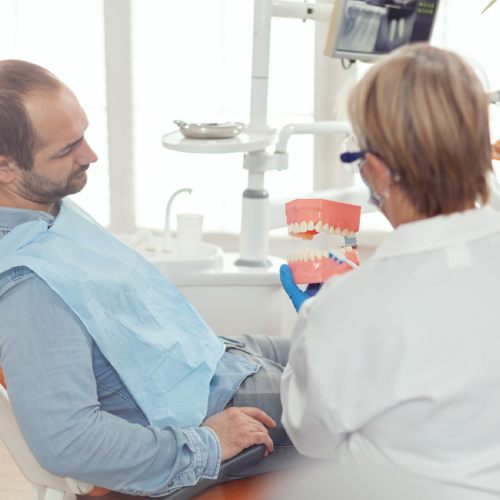
Understanding Implantology
A Complete Solution for Missing Teeth
Implantology is the branch of dentistry focused on replacing missing teeth using dental implants. A dental implant is a small biocompatible fixture placed into the jawbone to support a replacement tooth or dental restoration.
Once integrated with the jawbone, the implant provides a stable foundation for a crown, bridge or other dental restoration. The result is designed to restore both function and appearance.
More Than Replacing a Tooth
A carefully planned implant treatment can help restore chewing function, support surrounding structures and create a natural, balanced appearance.
Designed Around Your Smile
Dental implants can offer several functional and aesthetic benefits when appropriately planned and placed.
Natural Appearance
Implant-supported restorations can be designed to blend naturally with your existing teeth.
Restored Function
Replace missing teeth and regain greater confidence while eating, speaking and smiling.
Long-Term Solution
With appropriate care and maintenance, implant restorations can provide a durable solution for missing teeth.
Stable & Secure
Implants provide a stable foundation for crowns, bridges and other tooth replacement options.
Supports Jaw Health
Implants can help preserve the underlying jawbone after tooth loss by providing functional stimulation.
Individualised Treatment
Every implant treatment plan is developed according to the patient’s oral health, anatomy and treatment goals.

Who Can Benefit?
Is Dental Implant Treatment Right for You?
Dental implants may be considered for adults who have lost one or more teeth and are looking for a fixed tooth replacement option. Suitability depends on individual oral and general health factors.
- Patients with one or more missing teeth
- Patients looking for a fixed alternative to removable dentures
- Patients requiring support for an implant-supported bridge
- Patients seeking replacement of multiple missing teeth
- Patients with adequate bone support or those who may be candidates for bone augmentation
- Patients who are able to maintain good oral hygiene and regular dental care
Patient Experience
What You Can Expect
Dental treatment is easier when you know what to expect. Dr. Bharath Asopa’s approach focuses on listening carefully, explaining clearly and planning treatment around your individual needs.
01 / SINGLE TOOTH
Single Dental Implant
Your concerns, expectations and dental goals are discussed before treatment recommendations are made.
02 / MULTIPLE TEETH
Implant-Supported Bridge
Multiple missing teeth can sometimes be replaced using implant-supported bridges, depending on the clinical situation.
03 / FULL ARCH
Full-Arch Implant Solutions
For patients who have lost most or all teeth in an arch, implant-supported full-arch restorations may be considered.
How Dental Implant Treatment Works
Consultation
Your dentist evaluates your oral health, concerns and treatment goals.
Planning
Clinical examination and appropriate imaging are used to develop an individual treatment plan.
Implant Placement
The implant is placed into the jawbone using a carefully planned surgical procedure.
Final Restoration
Once healing and integration have progressed appropriately, the final restoration is fitted.
Precision & Technology
Planned With Precision
Digital imaging for detailed assessment of teeth and surrounding structures
3D imaging and CBCT where clinically appropriate for evaluating bone and anatomical structures
Digital treatment planning to help determine implant position and restoration requirements
Guided implant procedures where appropriate for the individual case
After Your Treatment
Healing & Aftercare
Healing time following implant placement varies from person to person and depends on factors such as the treatment performed, bone condition and individual healing response.
Your dental team will provide specific instructions for oral hygiene, diet, medication and follow-up appointments. Maintaining good oral hygiene and attending regular dental reviews are important for the long-term health of your implant and surrounding tissues.